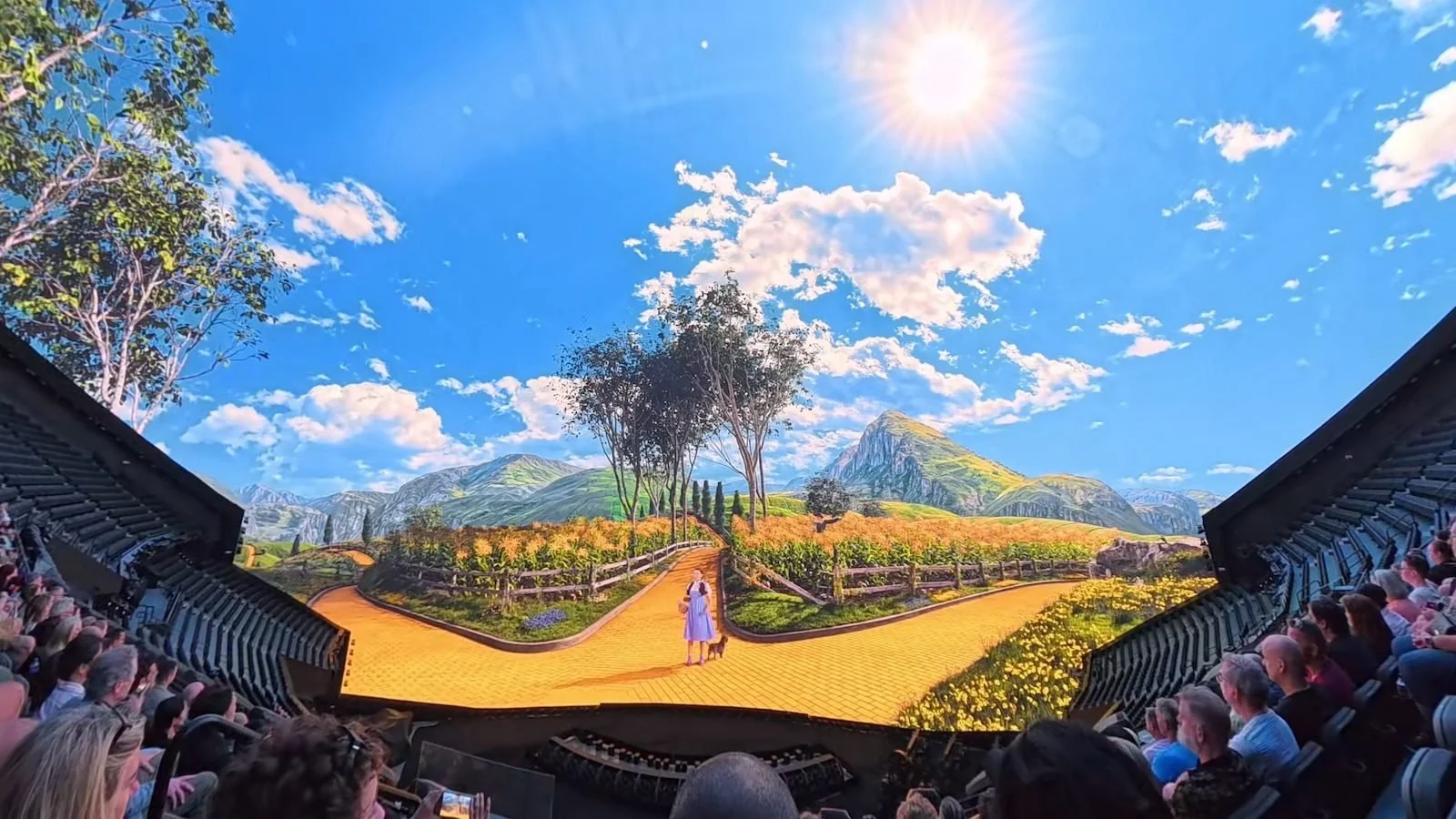
The Sphere in Las Vegas — 2026
A Brief History of Film
Part Fifteen (Final): The Great Reversal, IMAX, the Sphere…and Hand-Cranked Cameras???
by Fr. John Wykes, OMV
“I can tell there was some in-fighting when this website was designed.”
It was 2011 and I was getting a Masters in Digital Media. Our instructor, a web and phone app designer, was studying the home page projected on the screen. Just by looking, he was able to tell that struggles went on behind the scenes and difficult compromises were made. This, in turn, was verified by one of the students in the class who helped design the site.
Most remarkable about this teacher was his home life. This man, who designed apps and websites, told me that he did not own a personal computer, a tablet, or even a cell phone. By his own admission, he read the newspaper, listened to the radio, and had a land line for phone usage. Digital technology for him was all work-related, not life-related.
Fast forward about ten years or so, and we have what I can only call “The Great Reversal”. Suddenly the old is new again, and what once was considered new is now old.
Books are more popular again. CDs have disappeared while vinyl records (mp3 files notwithstanding) have made a bizarre but definitive comeback. And young filmmakers, tired of digital’s “ugly sharpness,” have bought used and refurbished motion picture cameras. If they haven’t been able to afford movie film, they have captured moving images digitally and manipulated them -- sometimes adding scratches, grain, and other artifacts to make their precious works look as “cinematic” as possible.
With independent filmmaking on the rise and distribution to millions as easy as a YouTube upload, it would seem that cinema has never been better. However, there are losers in this brave new world – specifically two: the traditional Hollywood establishment and movie theater chains.
After highly-successful films of the 1970s and 80s, liberal Hollywood was seen as too political for its own good. Oscar night turned into a platform of preaching to the masses about the latest left-wing cause. People began turning off the Awards telecast in droves. After 1983, when the viewing audience numbered over 53 million, viewership declined steadily. In 1996 the audience was 44 million, in 2002 it was 41 million. Then it dropped to 34 million in 2016, 19 million in 2024, and 17 million in 2026. And yes, that’s counting those who watch online.
Movie theaters have suffered even more in recent years. After reaching a new height in the early 2000s, ticket sales over the last quarter century have declined steadily. The pandemic of 2020 and 2021 forced the movie-going audience to stream their cinematic entertainment, and since then ticket sales have remained a full 20% below pre-pandemic levels. Some studios even prefer a digital streaming release to a traditional movie theater release.
Part of the reason is the remarkable advances in home theater entertainment technology. Thanks to surround sound, 4K (@4,000 lines of resolution) monitors, and pristine digital transfers to Blu-ray, UHD discs, and streaming, the movie experience in one’s own home is often superior to the same experience in a movie theater. Add to the equation other advantages of staying at home (more comfortable seats, cleaner bathrooms, and MUCH better popcorn) and the future of movie theaters is placed in serious jeopardy.
Back in the 1950s, Hollywood met the challenge of television by making films bigger with wide screen formats. In the first years of the 21st Century, cinema has met the home theater challenge with huge formats and spectacular venues.
Founded back in the late 1960s, IMAX is a film format that boasts ultra-sharp images projected on extra-large screens. The sharpness comes from the massive size of the film frame – 70 mm stock that runs horizontally through the camera (and projector), creating a negative image ten times the size of regular 35mm. The film reels are so heavy they can’t be moved except by machine. During a showing, the reels are projected on a massive, curved ceiling, with an image that often extends beyond the ordinary field of vision, creating a truly immersive experience. While the best result is obtained by showing the pristine 70mm film, most IMAX theaters settle for the somewhat inferior but still spectacular 4K digital laser projection system. The proliferation of IMAX screens, most especially in the 2010s and 2020s, has helped to keep movie theaters alive.
Unique in both its construction and execution, the Sphere in Las Vegas is by far the largest and highest-resolution cinematic/video projection entertainment venue ever created. It features a mind-blowing 16K resolution wraparound LED screen that is installed on a 516-foot-wide and 366-foot-high sphere. The venue can seat over 17,000 people. The biggest and most popular recent event has been the showing of The Wizard of Oz (1939) – digitally extended to fill the entire screen and featuring extraordinary “4D” effects such as wind machines, blowing leaves, and smoke. The truly mind-blowing experience comes at a steep ticket price (minimum over $100), but most viewers say it’s worth it.
In the midst of all this, some interesting films have been made in the 2020s by aging but still popular directors.
Martin Scorsese made The Irishman (2019), starring Robert DeNiro and Al Pacino, perhaps the very last time all three aging giants will work together. He also directed Killers of the Flower Moon (2023). Now 83, Scorsese is currently working on What Happens At Night starring Leonardo DiCaprio and Jennifer Lawrence.
Steven Spielberg made his semi-autobiographical The Fablemans in 2022. The deeply personal film was hailed by the critics but bombed domestically, though the film found enthusiastic audiences elsewhere, especially in France. The latest film of this 79-year-old director is Disclosure Day (2026) a science fiction epic featuring music by his 94-year-old collaborator, John Williams.
In 2013, famous renowned animator Hayao Miyazaki announced his retirement, citing his age and poor eyesight. But he shocked the world years later when he made The Boy and the Heron (2023) at the age of 82. The film won accolades from critics and audiences alike. An instant classic, it easily won the Academy Award for Best Animated Feature, and Miyazaki became the oldest director to receive that honor. Now 85, Miyazaki has given up on the idea of retirement and is working on his next film.
The most surreal cinematic roller coaster ride of the 2020’s had to be the release of Francis Ford Coppola’s Megalopolis (2024). A sprawling and lavish science fiction epic, the opus was funded by Coppola himself, who spent $120 million from his own winery. The film received the worst reviews of any in recent memory; even fans of Coppola who desperately wanted to like the film were unable to do so. Undaunted, Coppola pulled the film from digital streaming platforms, insisting that his work needed to be seen on the big screen to be truly appreciated. As a result, to date Megalopolis has made only $14 million. Recalling the negative reviews bestowed upon Apocalypse Now (1979) when first released, Coppola is convinced that Megalopolis will find its true audience one day and become a cult classic. When considering the growing interest in this film and the heated and divisive production history that piques the interest of curious cinephiles, Coppola might be right.
We end as we began – with simple films made with a hand-cranked camera. The still we see at the bottom of this article is from Francis Ford Coppola’s remake of the Lumière’s Workers Leaving the Factory. The original was made back in 1895, but Coppola made his loving homage in 2019. To do so, he used black-and-white film and a hand-cranked movie camera. The result is a surreal and enchanting homage to the magic of cinema. The haunting image recalls where we have been – and where we are going. It is a fitting conclusion to our Brief History of Film…
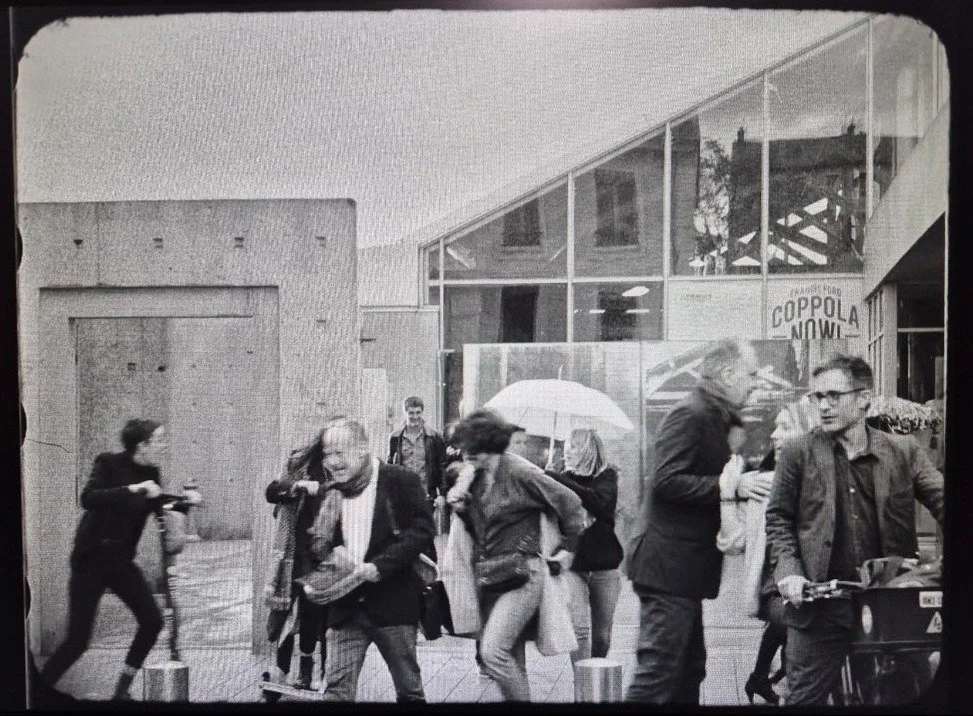
Workers Leaving the Factory (2019)